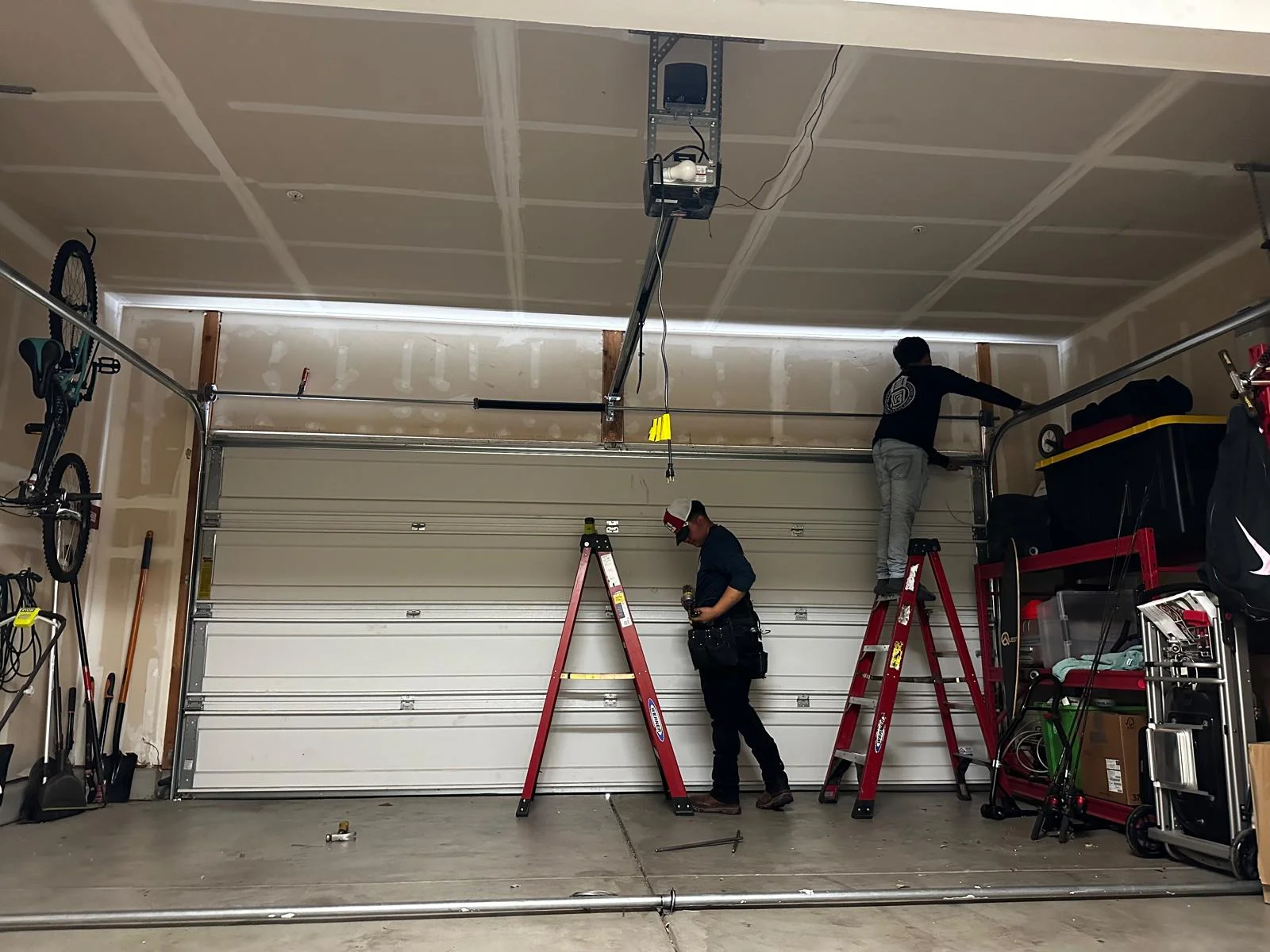
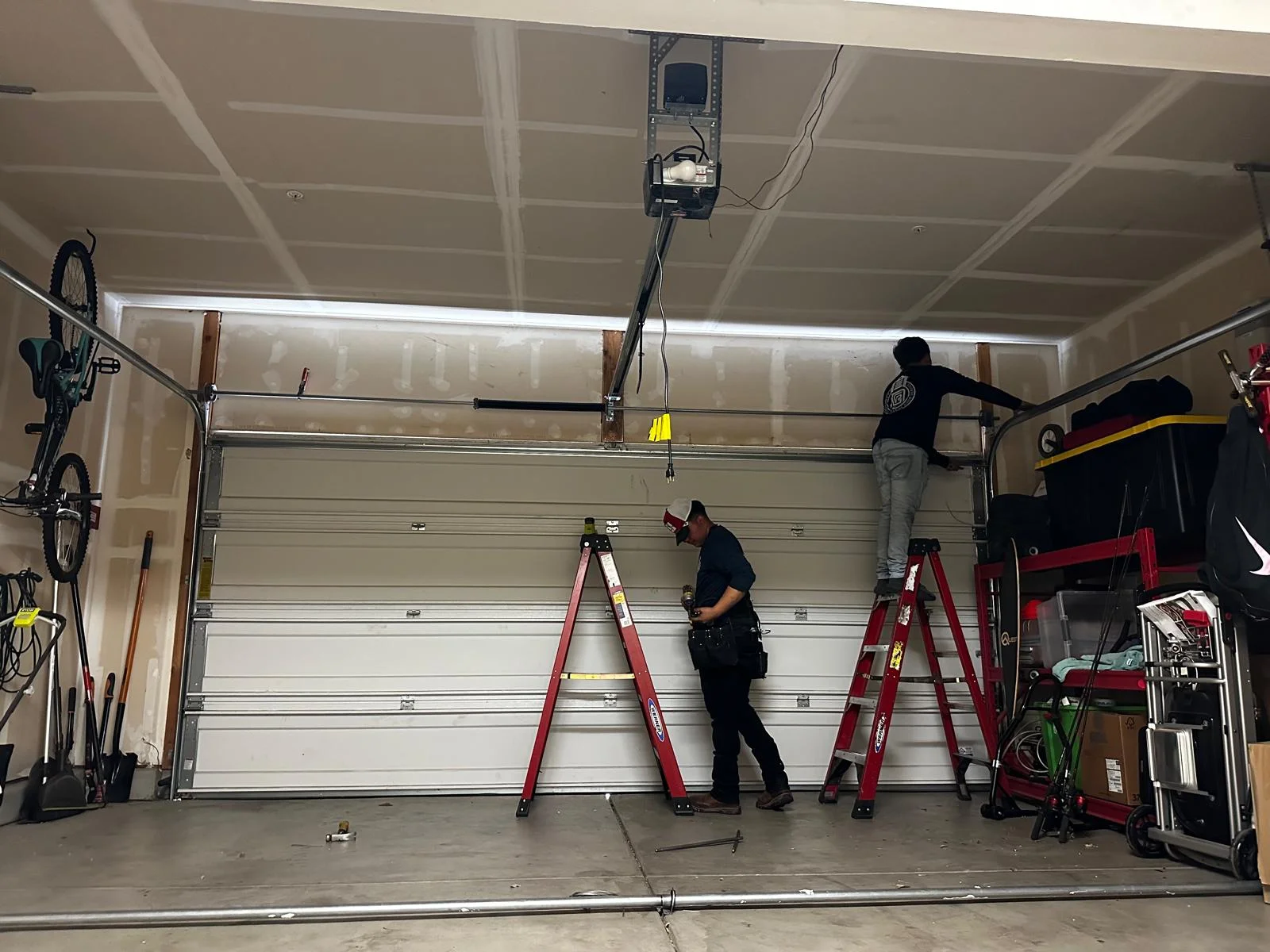
A garage door spring does not “look” dangerous when it is sitting quietly above the door. That is exactly why homeowners get hurt. A torsion spring under charge stores enough energy to cause serious injury if it is wound, cut, or removed incorrectly.
As licensed garage door professionals serving Stockton, Tracy, Manteca, and the rest of San Joaquin and Stanislaus counties, we treat spring work as a controlled mechanical job—not a weekend hardware-store experiment.
How garage door springs actually work
Most modern residential doors use torsion springs mounted on a shaft above the opening. The springs counterbalance the door’s weight so you (or the opener) only move a fraction of the true load. Extension springs along the tracks do a similar job with a different geometry. When springs wear out, the opener starts doing the heavy lifting. That is when motors burn, cables fray, and doors slam or refuse to open.
Warning signs you should not ignore
- A loud bang from the garage (classic broken torsion spring)
- Door suddenly feels much heavier
- Opener hums, strains, or reverses mid-travel
- Door sits crooked or one side rises faster
- Visible gap in a spring coil
If any of those show up, stop using the door. Forcing travel with a broken spring can damage cables, drums, rollers, and the opener—and it raises the injury risk.
Why “just replace the spring yourself” usually goes wrong
Correct spring work is specification work. Wire size, length, wind direction, and turn count must match door weight and track configuration. Dual-spring systems should typically be replaced as a matched set. Commercial doors add another layer: cycle ratings, drum timing, and higher stored energy. Guessing with “the spring that fits the shaft” is how doors come off balance the next week.
What our spring service includes
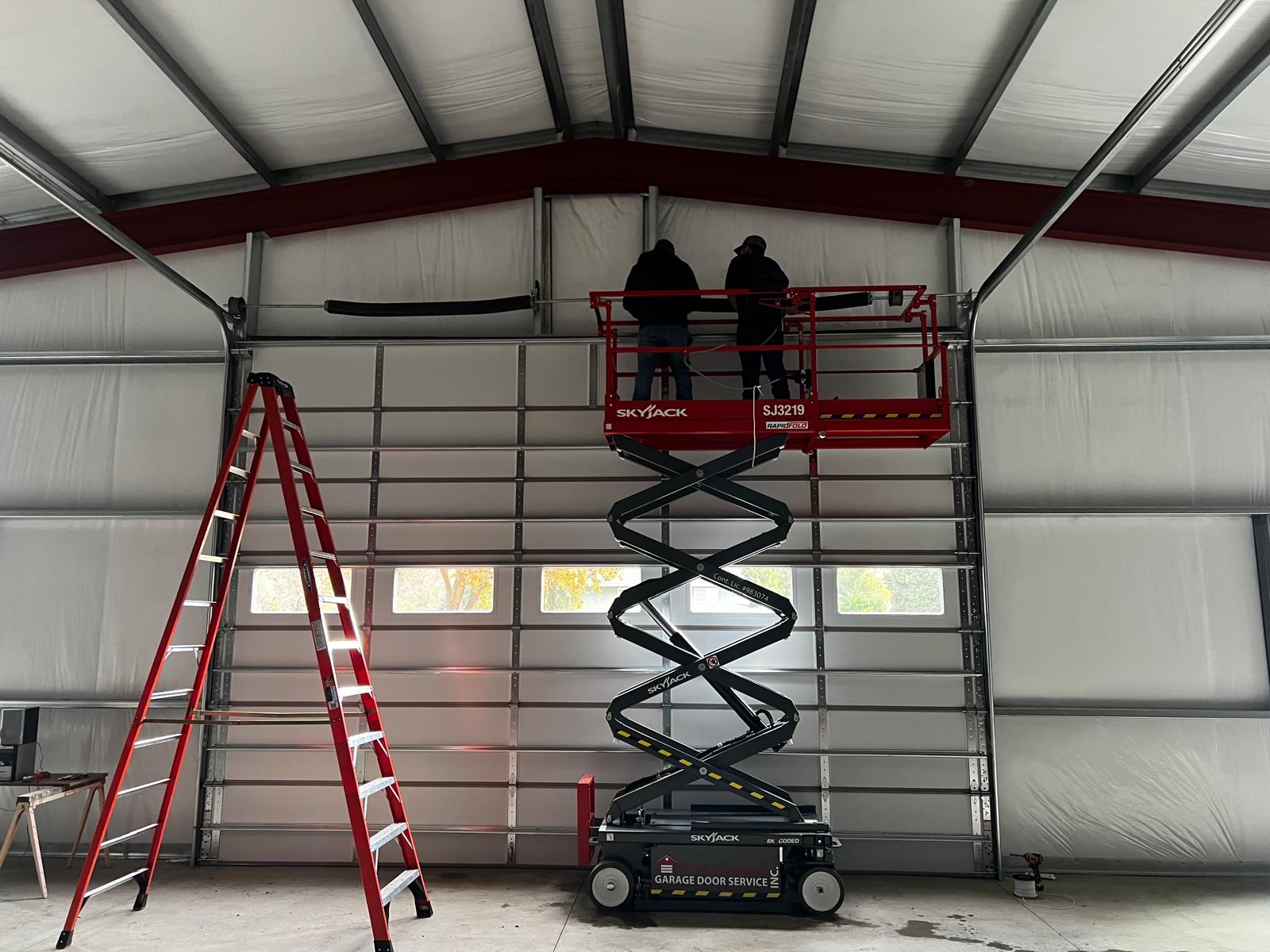
We inspect the full counterbalance system—springs, cables, drums, shaft bearings, and track—then replace with correctly rated parts. After winding and setup, we cycle-test the door, re-check opener force and travel limits, and confirm the door can be lifted manually in a power outage.
Parts are often staged from our Marchy Office & Warehouse in Ceres so Stockton and Tracy calls move faster. For city-specific service coverage, see our Stockton and Tracy pages.
Why hire A Professional Garage Door Service
You are not paying for a part. You are paying for safe procedure, correct sizing, and a door that feels light and true when we leave. Our team is licensed and insured (CSLB #983074), and we explain options before work starts—repair what is failed, replace what is worn, and skip the upsell theater.
Need spring service? Central Valley Office (209) 605-5751 · Office & Warehouse (925) 605-8891 · Locations · Request an estimate
FAQs
Should torsion springs be replaced in pairs?
On dual-spring residential doors, yes in most cases. Matched springs keep balance even and help both sides wear at a similar rate.
How long do garage door springs last?
Cycle rating and usage drive lifespan. A door used multiple times daily fails sooner than a lightly used door. We can estimate remaining life during a maintenance visit.
Can a broken spring damage my opener?
Yes. Openers are not designed to lift an unbalanced door for long. Many “dead opener” calls from Stockton and Tracy homes are actually spring failures.
Do you cover Manteca and Ripon-area homes too?
Yes—San Joaquin County coverage includes Manteca, Tracy, Stockton, and nearby communities, coordinated from our Ceres locations.
Why not hire a handyman for springs?
Spring tension is a specialized hazard. Incorrect winding or cable setup creates immediate safety risk and expensive follow-up failures.